
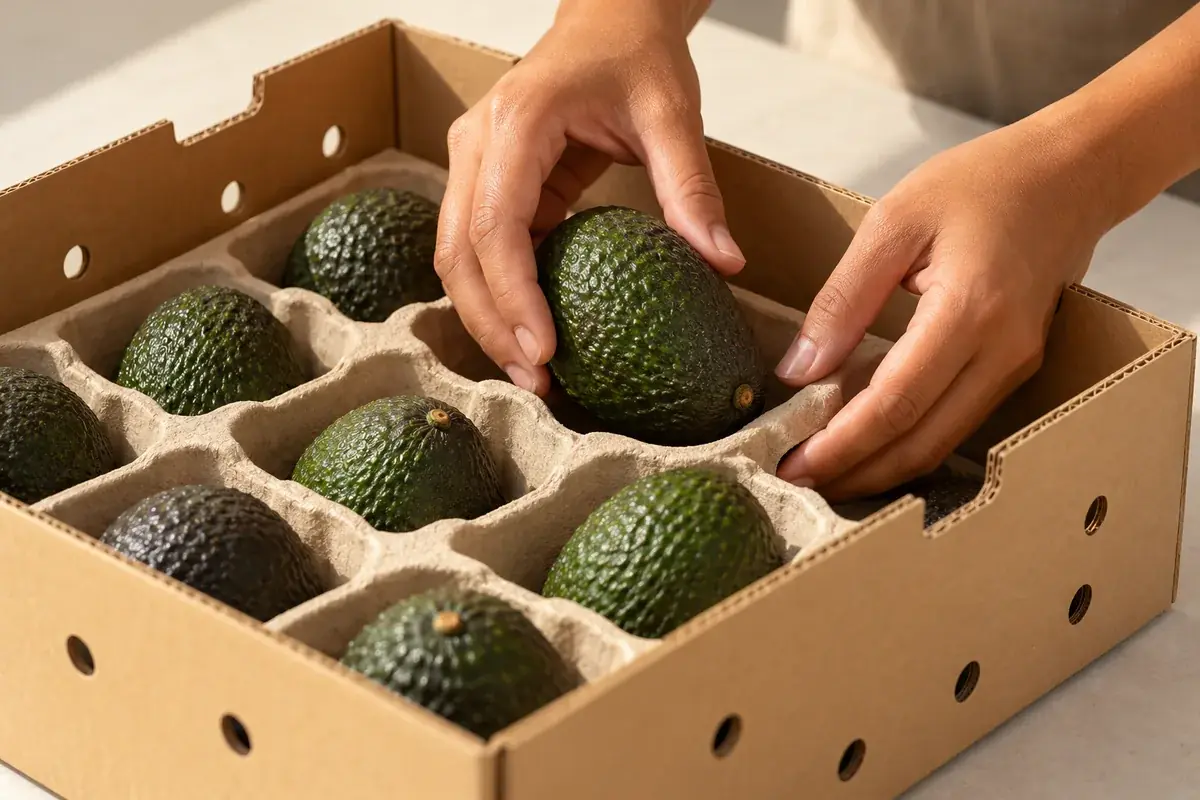
Begin before delivery
The packing process begins with information: supplier identity, source lot, variety if known, harvest timing and estimated quantity. Agree arrival dates and how the fruit will be presented for receiving. Record who owns the fruit and who decides whether an incoming lot is accepted. These details matter in a third-party service arrangement.
Agree what receiving checks mean
Receiving checks should answer whether the delivered fruit fits the order brief. Discuss external condition, maturity requirements, sampling and any buyer testing needs. Confirm what can actually be checked by the service provider. A visual check and a laboratory result answer different questions; neither should be implied when it has not been agreed.
Separate sorting from grading
Sorting addresses suitability: which fruit should continue into the intended pack and which should be removed or held aside. Grading then groups the accepted fruit against the required size and condition specification. Agree tolerances and the disposition of fruit outside specification before processing, so that a difference in pack-out does not become an avoidable dispute.
Make the pack traceable
Specify the carton format, count or net weight, labels and source-lot reference. Reconcile packed quantities with receiving and rejection records. If material is supplied by the customer, confirm arrival and suitability before the packing date. If the packer supplies it, agree availability and approval of artwork or labels.
Close with the handover
Confirm the holding conditions, collection time and dispatch records. Cooling and storage are separate scope questions and must not be assumed. This article describes planning stages commonly discussed in avocado packing; the actual Ken Fresh Growers service is established by a confirmed brief.
Review a packing result before interpreting its percentage
Imagine a grower delivers fruit measured in crates and receives a report showing cartons packed. Those figures cannot be compared directly without consistent quantity information. Agree the measurement method, identify packaging tare where relevant and separate rejects from fruit still held. If size distribution differs from the request, record the decision on any alternative packing format. The pack-out figure becomes useful when the customer can understand the categories and units behind it.
An intake example: resolve the measurement basis first
A grower describes the incoming delivery by crate count while the exporter’s order uses net kilograms and carton counts. Before processing, agree how the intake will be measured and how the packing report will connect those units. Otherwise the final report may look inconsistent even if the fruit has been accounted for. The packer should not be expected to infer the measurement basis from a delivery note. Write it into the service brief and carry the source-lot reference through the reconciliation.
Apply the guide to your programme
| Situation | Decision to document |
|---|---|
| The arrival quantity differs from the booking | Record the actual received quantity and agree whether the processing plan should change. Keep the revised instruction connected to the original lot rather than silently replacing the booking figure. |
| A large share falls outside the requested grouping | Present the quantity and reason against the buyer specification. The customer should decide whether to hold the fruit, approve an alternative pack or make another arrangement. |
| Fruit remains after the planned run | Identify the unprocessed or held balance separately from packed output and rejects. Agree its ownership, holding requirements and collection rather than treating it as an unexplained difference. |
More about your programme.
Is a low pack-out always a packing fault?
Not necessarily. The incoming condition, buyer tolerances, size distribution and quantity method all affect interpretation. Review the agreed specification and underlying records before drawing a conclusion.
Prepare a lot map before vehicles arrive
A lot map is a working description of which deliveries belong to which source and order. It can be simple, but it should allow the receiving team to distinguish fruit that must remain separate. Record the expected delivery references, the owner and any portions reserved for different customer specifications. This gives staff a basis for asking questions before containers are unloaded into a shared area.
If the delivery differs from the map, record the difference while the source can still be identified. A missing reference should not be replaced with a guessed one merely to keep work moving. Agree who may correct the intake information and whether the fruit can proceed while the discrepancy is reviewed.
Define a receiving sample without treating it as the whole crop
The receiving instruction should identify what is examined and how the observations will be recorded. A person checking only the most accessible containers may see a different picture from someone looking across the delivery. Explain the sample’s scope so that later decisions do not imply a level of assessment that was never performed.
Record the sample findings with the delivery reference and inspection stage. If a concern requires a wider check, document the decision to expand the review. Keep an acceptance decision separate from a technical conclusion about the cause of an observed defect. The quality guidance explains why those questions should be treated independently.
Set aside an exception without losing its identity
A fruit owner may want a quick decision on a portion that does not fit the approved specification. Identify the affected containers and the reason for holding them, then state who can authorize the next action. This prevents a temporary hold being misunderstood as permission to blend the fruit into another customer’s order.
The decision could involve further assessment, a revised specification accepted by the relevant parties or return to the owner. Do not assume a processing outlet or an alternative sale exists. Record the final instruction and the quantity to which it applies, using the same measurement basis as the intake record wherever possible.
Trial the proposed pack before repeating it across the lot
Use representative avocados from the actual size group when checking the packing arrangement. Review how fruit is supported, how the carton closes and whether the label remains legible after normal handling. A display sample assembled from unusually uniform fruit may not reveal the fit problems encountered across the available lot.
If the arrangement needs revision, record the new instruction before repeating it. Consider whether the change affects the count, stated net weight, materials or the customer’s presentation requirement. This is particularly useful when a fruit owner supplies packaging that was selected before the current crop’s size distribution was known.
Reconcile the work in a way the owner can reproduce
List the incoming measurement, the accepted portion, packed output and fruit awaiting another agreed disposition. State the units next to each number. If intake is measured by gross container weight and output by net fruit weight, explain the difference instead of presenting the figures as directly interchangeable. Retain the basis used for any container allowance.
A reconciliation can reveal a question without proving a loss. Ask whether samples, retained fruit, packaging weight or separate lots were treated consistently. The aim is a record that another person can follow. Do not promise a standard packing yield, because the incoming condition and the agreed output specification differ between service orders.
Use the next delivery to close an identified gap
After the owner reviews the first completed service order, select the changes that would make a repeat delivery clearer. Examples include a better source reference, a revised container label or a more representative pack sample. Assign each change to the person who can act before the next delivery rather than leaving it as a general request to improve quality.
Keep the revised instructions with the next booking request. A past service order is useful evidence of an agreed process, but it should not substitute for confirmation of current timing and scope. Read avocado grading and packaging for specification questions, then use the packing inquiry to describe the proposed work.
Additional questions for the order review
What should happen if two incoming lots have the same informal name?
Give each delivery an unambiguous working reference before the fruit loses its original grouping. The reference should connect with the owner’s source information and the agreed packing instruction. An informal orchard nickname may be familiar to one person but unclear to someone completing a dispatch record later. Ask the owner to confirm the distinction and retain the explanation. Do not solve a naming conflict by assuming the deliveries can be combined; the customers, harvest dates or required output groups may be different.
Can a finished-carton count be compared directly with intake weight?
Only after the measurement basis is explained. Carton count describes units of packed output, while intake weight may include containers, unaccepted fruit or portions assigned elsewhere. Record the actual net quantity represented by each output group and the treatment of samples or retained fruit. If a conversion is used for a review, identify the assumption and its source. This prevents a convenient estimate from becoming an apparently exact reconciliation and gives the owner a practical way to ask about a difference.