KENYAN ORIGIN · AVOCADOSRich in
Rich in
possibility.
Explore Kenyan avocado sourcing for commercial buyers: variety, maturity, grading, packing and shipment planning, brought together in one programme.
Explore avocados Avocado packing
Explore avocado varieties, compare buyer requirements and discuss sourcing, packing and timing for your programme.
Explore Kenyan avocado sourcing for commercial buyers: variety, maturity, grading, packing and shipment planning, brought together in one programme.
Explore avocados Avocado packingA useful fruit selection begins with what the customer will do with the produce: sell whole fruit, manage ripening, prepare foodservice portions or discuss a separate processing application. Variety, incoming maturity, size, pack and journey must work together. The cultivar notes below describe agricultural references and questions to ask; they are not a catalogue of confirmed Ken Fresh stock.
Hass and Fuerte are established commercial avocado references in Kenya. Discuss the actual variety and proposed lot before agreeing a product specification. Relative terms such as early or late describe a comparison within a production setting. Rainfall, altitude, orchard conditions and the current crop can shift availability; an overseas cultivar calendar should never be copied into a Kenyan delivery commitment.
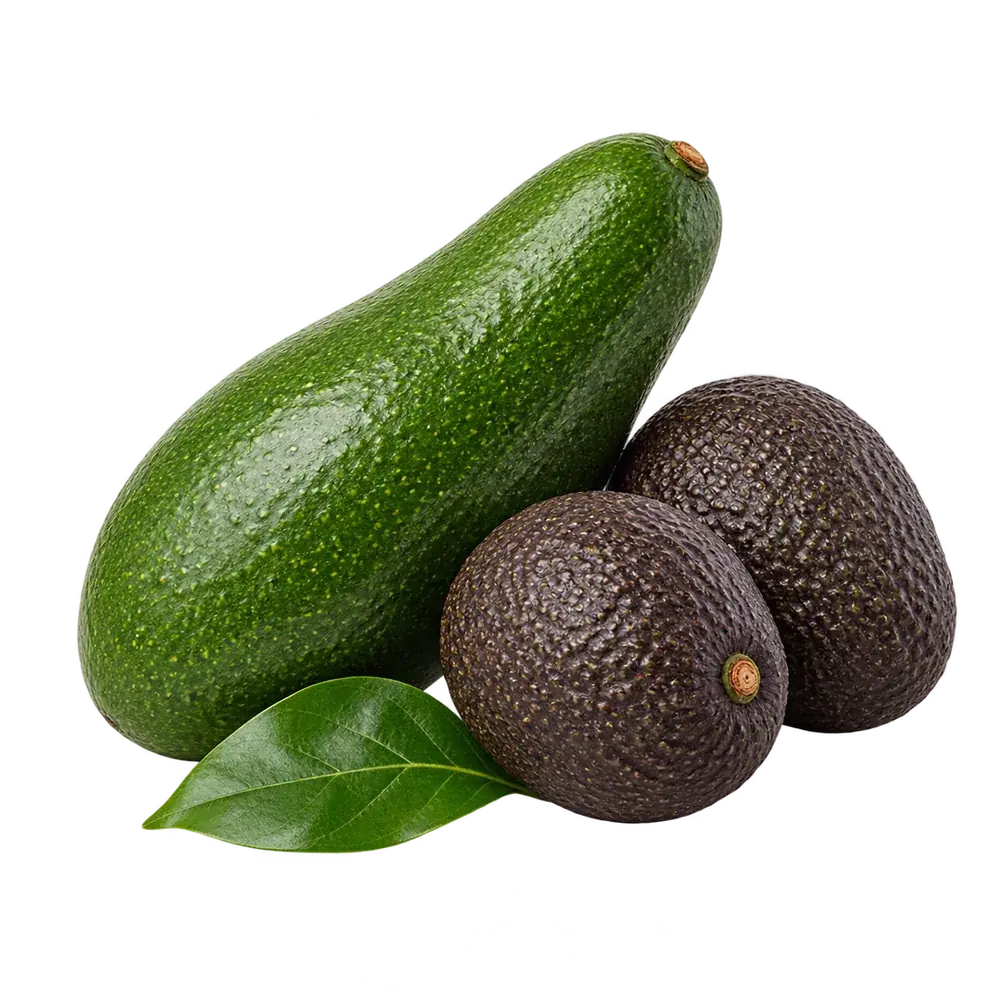
Hass is an established commercial export avocado in Kenya. Its oval-to-pear shape, pebbled skin and creamy flesh distinguish it from smooth green-skinned types. Skin commonly darkens during ripening. World Agroforestry describes its nutty flavour and suitability for shipping; those characteristics do not establish the condition of an individual consignment.
For fresh retail or foodservice use, ask for the proposed count, maturity evidence and ripening stage at handover. Separate eating-quality preferences from transit requirements: fruit intended for later ripening should not be assessed only against a photograph of a ready-to-eat avocado. Request the current harvest assessment for the named growing area rather than treating a national calendar as a release to pick.
Fuerte is commercially important in Kenya alongside Hass. It is generally pear-shaped, with comparatively smooth green skin and a creamy eating texture. It remains a green-skinned product as it ripens; colour comparisons with dark-skinned Hass are therefore misleading. The World Agroforestry Kenya guide places its picking period earlier than Hass in its cultivar comparison, without establishing a universal national harvest date.
A Fuerte purchasing brief should identify whether fruit is intended for fresh sale or another agreed use, then define its own size, maturity and arrival expectations. Do not substitute Fuerte for Hass without buyer approval. Give packing staff a variety-specific reference, especially where a receiving team handles more than one avocado type during the same working period.
AFA describes Pinkerton as a green-skinned avocado with a pebbled surface, a relatively small seed and a pronounced pear shape. Some fruit develop a long neck. It is documented in Kenyan commercial growing guidance, but this page does not establish routine Ken Fresh availability or the size of the market for it.
Ask for a representative sample before selecting tray cavities or carton counts. A pack designed around a shorter fruit may apply pressure to a long neck or leave fruit poorly supported. Buyers considering Pinkerton for slicing or other foodservice uses should assess an actual ripe sample for texture and flavour, and separately establish the handling plan for the proposed delivery stage.
Reed is included in Kenyan avocado references. AFA describes round fruit that stays green when ripe and matures later than Hass in its cultivar comparison. Its round profile makes it visibly different from necked Pinkerton and pear-shaped Fuerte. A cultivar description is not evidence that a particular Kenyan supplier has export-ready Reed volumes.
Commercial evaluation should begin with the available fruit, its pack fit and the buyer’s intended presentation. Review whether a round fruit sits securely in the proposed packaging and whether the customer accepts that presentation. Confirm eating characteristics with a ripe sample; a larger-looking fruit should not automatically be sold as delivering a particular usable-flesh yield. No universal Reed storage period or Kenyan harvest month is specified here.
Puebla appears in Kenyan cultivar references and is also discussed in rootstock and local-market contexts. UC Riverside records dark, glossy fruit and notes limited shipping performance in its collection description. These observations support caution when comparing Puebla with a standardized Hass export programme, but they do not quantify its Kenyan commercial availability.
Ask first whether a conversation concerns planting material, locally marketed fruit or a specific fresh-fruit order. These are different transactions. For a proposed fruit purchase, obtain current photographs, a representative sample and a route assessment before discussing export suitability. Reliable lot-specific size, flesh texture, flavour, regional harvest timing and storage information would be needed before issuing a detailed Puebla product specification.
Kenyan references also include Nabal, Booth selections and local seedling material. Names used in informal trade may describe fruit size or appearance rather than a verified cultivar. A large avocado should therefore not be assigned a named variety solely because it is sold under a broad local description.
For a less familiar selection, request cultivar identification and separate records for its lot. Establish whether the customer wants fresh fruit, processing material or nursery stock. Compare a sample with the intended use before agreeing quantities. The presence of a name in a cultivation reference does not prove commercial export demand, predictable shipment volumes or a service offered by Ken Fresh Growers.
Treat storage instructions as part of the lot specification. Ask the responsible technical team to identify the variety, maturity and ripeness stage, expected holding duration and proposed transport conditions. Agree avocado handling conditions for the actual cultivar and maturity stage; an unsuitable cold treatment can damage fruit. This variety guide does not prescribe a storage protocol or a plant-health treatment.
Review the physical pack as well as the fruit. Check that fruit fits without compression, that packaging can be handled as intended and that labels identify the lot. Request written agreement before substituting a different cultivar or carton. For commercial inquiries, use the dedicated Kenyan avocado export page or . Customers who already own their fruit can start with third-party fruit packing.
A reliable current inventory, variety-by-variety volumes, exact harvest dates, prices, buyer-market acceptance and company storage capabilities have not been supplied. Some less common cultivars also lack sufficiently consistent Kenyan information about typical fruit size, flavour and postharvest performance. Rather than turn those gaps into promises, request the current specification and an appropriate sample when preparing your inquiry.
Sourcing Kenyan fruit or preparing your own harvest? Tell us what your programme needs.