
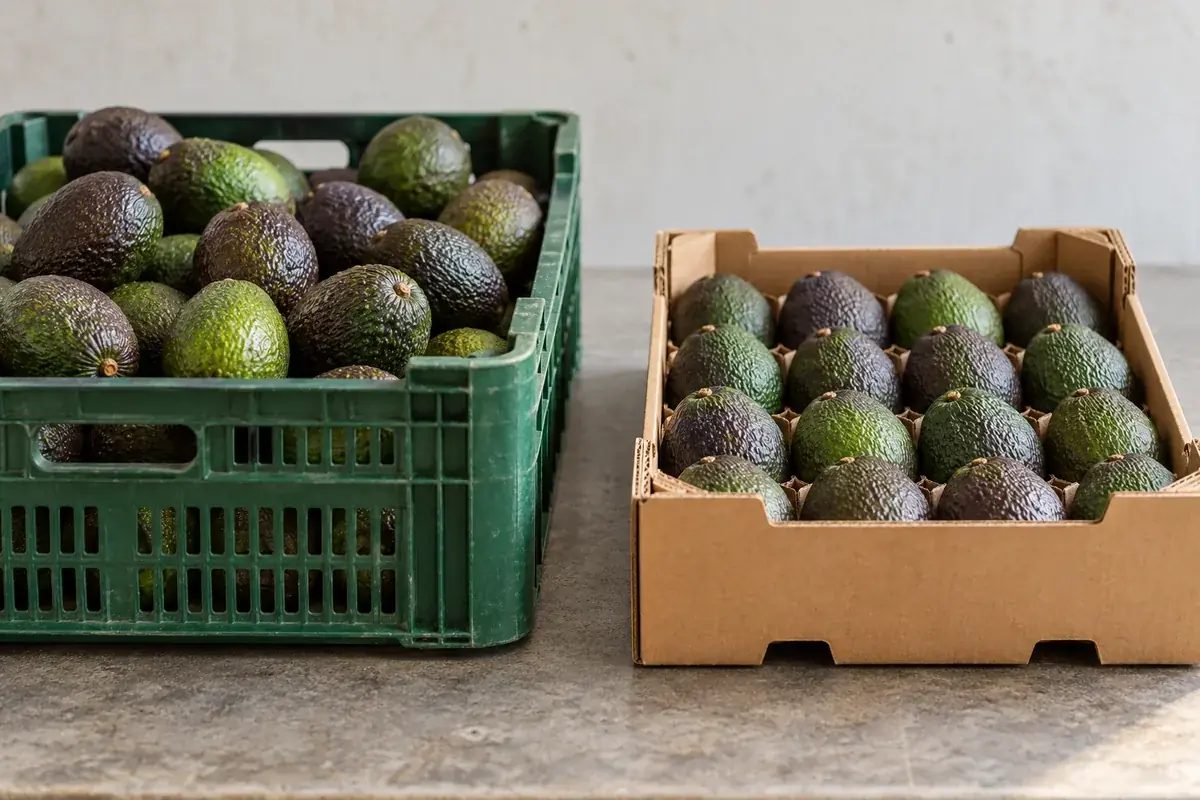
A service rather than a fruit sale
In a third-party packing arrangement, the customer engages a business to perform an agreed packing scope. The arrangement can be discussed separately from the sale of the crop. Fruit ownership, risk and the party responsible for commercial decisions should be explicit; they should not be inferred from who physically holds the fruit.
Match support to the programme
A grower or exporter may need inspection, sorting, grading and packing support for a specific order. Defining those activities can help focus resources on the required programme. Whether outsourcing is practical depends on service availability, transport, materials and the customer’s own arrangements. It is not an automatic promise of lower cost or higher returns.
Keep control through a clear specification
Outsourcing does not remove the need for a buyer brief. Provide acceptance criteria, pack format and label requirements. State who can approve changes and what happens if the incoming fruit does not match expectations. A written scope gives both customer and packer a reference for decisions.
Plan the supporting logistics
Confirm delivery windows, carton supply, any storage requirement and collection timing. Agree responsibilities for rejected or out-of-specification fruit. If export documentation, freight or temperature-controlled handling is needed, identify it separately and ask which services can be confirmed.
Make reconciliation part of the agreement
Agree how incoming quantities, packed output and rejects will be recorded. Set out what information the customer receives at handover. An effective service discussion covers the entire journey through the agreed scope, not only the act of placing fruit in a carton.
Choose which decisions you retain as the fruit owner
A third-party packing service needs a practical authority structure. Decide who can accept an incoming lot, approve an alternative size grouping, authorise a carton substitution and release the finished fruit. These responsibilities may remain with the customer even where the packer carries out the physical work. Make the contact route workable during the processing period and agree what happens if the authorised person cannot be reached.
A service example: decide who can approve an exception
A grower engages a packer while an exporter supplies the carton instruction. If the delivered fruit does not fit the specified grouping, the packer needs to know who can decide the next step. Identify the authorised contact and the information needed for approval before the service begins. Clarify whether the grower or exporter controls the material and quantity decisions. This prevents an exception becoming an unapproved change simply because several businesses are involved in the programme.
Apply the guide to your programme
| Situation | Decision to document |
|---|---|
| The packer receives conflicting instructions | Use the approved brief and named decision authority to resolve the difference. Record the authorised final instruction before preparation proceeds on a changed basis. |
| The incoming fruit does not match the brief | Identify the lot, quantity and condition finding, then follow the agreed hold or approval route. The service agreement should say who makes that decision. |
| The service ends with fruit still held | Reconcile the balance and agree its next handling and collection. The physical packing run and the commercial handover should both have a clear close. |
More about your programme.
Does outsourcing packing transfer all responsibility?
No. Responsibilities need to be established explicitly. The customer, packer, exporter and carrier may each retain different decisions, costs and risks within the programme.
Decide which decisions the fruit owner will keep
A grower or exporter can request help with physical preparation while retaining control over the fruit sale and customer relationship. Write down the decisions that remain with the owner: approving a substitute pack, accepting a different grade distribution or authorizing the disposition of rejected fruit. Then identify the person who can respond when one of those decisions is needed.
The service team should not have to infer commercial authority from whoever happens to be reachable by phone. If more than one person may issue instructions, explain how conflicting requests will be resolved. A simple approval record can prevent an operational suggestion from being misunderstood as a change to the owner’s sale agreement.
Compare the complete service requirement with doing it yourself
A meaningful comparison includes more than the visible packing activity. List the materials, supervision, record preparation, fruit movement and collection arrangements that would be needed under either approach. Identify which tasks your team can actually perform and which would still require a separate supplier. Keep the comparison specific to the proposed crop and customer.
Do not assume that using a third party will always reduce cost or improve yield. Those outcomes depend on the agreed scope and incoming fruit, and no universal saving is established here. The useful benefit is the possibility of defining a service arrangement that fits a particular requirement, provided the responsibilities are explicit.
Explain the information gap between orchard and customer
A packer may receive fruit with little knowledge of the final buyer’s presentation requirement, while the owner may know the buyer but not the details needed on the work instruction. Translate the customer’s request into observable packing criteria before delivery. Keep the original requirement available if an interpretation needs to be checked.
For example, a request for uniform fruit should explain whether the buyer means size grouping, ripeness stage or an agreed appearance range. A broad phrase can be interpreted several ways. If the owner cannot yet answer a question, mark it as unresolved rather than allowing the packing team to create its own commercial specification.
Agree what happens when the incoming estimate is wrong
A harvested quantity can differ from the estimate used to request a service slot. Ask how a larger or smaller delivery would be communicated, and whether the proposed materials and timing can still be used. Confirm the actual arrangement before sending fruit; an earlier discussion is not proof that an unplanned quantity can be accepted.
If the delivery contains several source portions, retain their identities while the revised plan is considered. A quantity change should not become an unexplained mixture of fruit intended for different customers. Record any revised output allocation and make the instruction visible to the owner, service team and collector.
Use reconciliation as a shared management tool
The owner should be able to relate the final packed output to the incoming lot and any fruit awaiting another decision. Agree the units, container allowances and treatment of samples before reviewing the result. A percentage without a stated basis is difficult to compare between orders and can create an impression of precision that the records do not support.
Use the record to identify a practical next step. If a large portion did not fit the agreed size group, the next discussion may concern harvest selection or a different customer specification. Do not assume that packing can transform unsuitable incoming fruit into a product that meets every buyer’s requirement.
Choose the right next conversation
A fruit owner asking for third-party packing should bring an incoming-lot description and a proposed output brief. An international buyer seeking fruit should instead begin with a sourcing inquiry. Keeping those routes separate helps establish whether the conversation concerns a service, a sale or two arrangements that need their own approvals.
Read the avocado packing guidance, then use the packing inquiry to list the proposed work. Methods, materials, timing and supporting services still require confirmation before a booking is agreed.
Additional questions for the order review
Can a service customer keep several buyers’ fruit separate?
That requirement should be part of the proposed order, with a clear reference for each allocation and instructions for the relevant output. Ask the service provider to confirm whether the arrangement can be accommodated before delivery. Distinguish fruit ownership from buyer allocation: one owner may have several orders, and one buyer may receive more than one source lot. A useful working record makes those relationships explicit. Do not assume separation will happen automatically simply because the owner’s commercial team understands which customer wants each portion.
What should a repeat service request retain from the first order?
Retain the instructions that remain valid, the record references and the specific lessons from the completed work. Then update the crop, quantities, materials and proposed timing for the next delivery. A repeat request should not silently inherit an outdated size assumption or customer label. Ask the provider to confirm the current arrangement rather than treating the previous service as a standing acceptance of future fruit. This balances continuity with the fact that each incoming harvest and customer requirement can be different.