
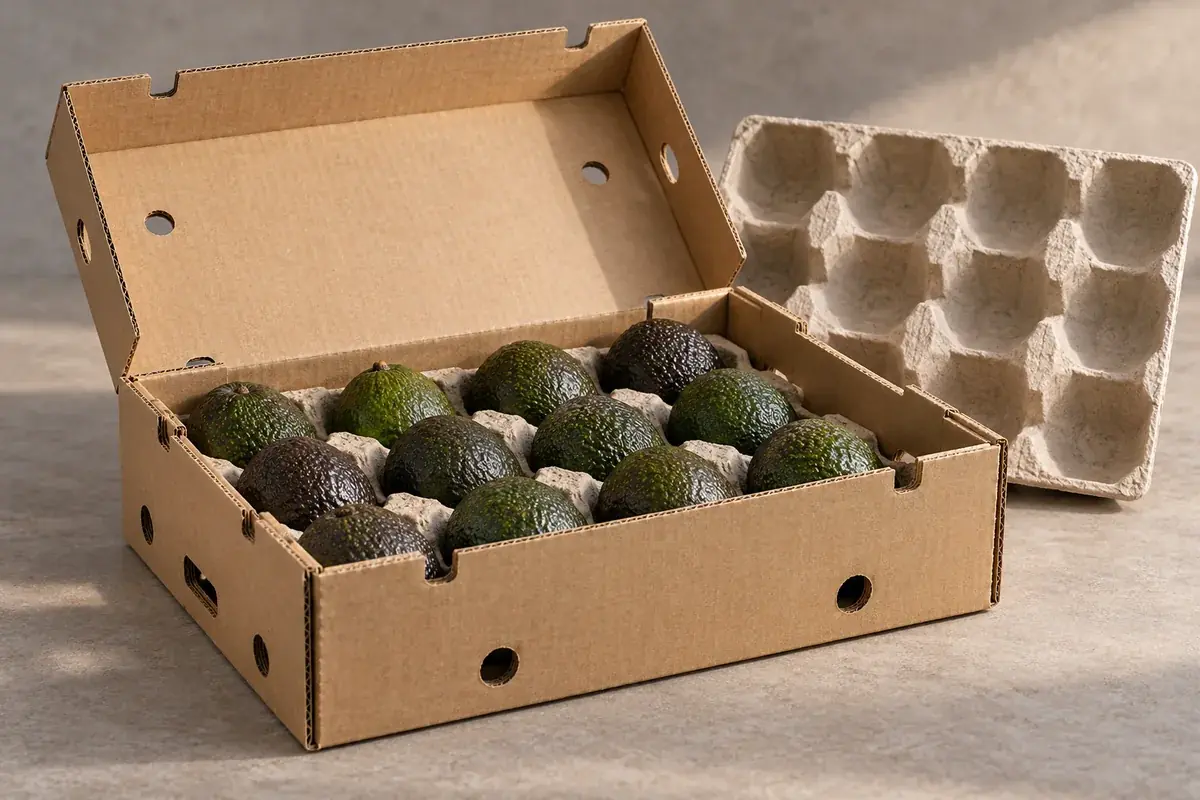
Start with the fruit and route
Packaging decisions should reflect the fruit’s size, condition and intended handling journey. Assess avocado maturity, size distribution and the proposed journey together before approving a pack. Tell the packing provider the destination, planned route and customer expectations before selecting a carton. A format used successfully in one programme is not automatically right for another.
Define the whole packing unit
State the count or net weight, carton construction requirements, internal protection, ventilation and pallet arrangement. Explain any retail or wholesale labeling rules supplied by the buyer. The specification should let the supplier identify the actual material required rather than guessing from an approximate description.
Keep labels connected to records
Agree what product and lot information appears on cartons and how that relates to the packing list and dispatch records. Confirm which party approves artwork. Destination labeling requirements need an individual check; a generic example should not be presented as a complete legal template.
Allocate material responsibility
Decide who purchases cartons, inserts, labels and any pallet materials. Agree lead times, approval of samples and the response if materials do not match the brief. Custom branding may require earlier confirmation than plain materials. Any specific Ken Fresh Growers packaging option must be confirmed before it is included in an order.
Check the shipment as a system
Before dispatch, review the package specification alongside the fruit condition, handling arrangements and destination documents. Packaging supports the programme but does not establish plant-health eligibility. Keep the importer, packing provider and freight partner aligned on the same approved information.
Treat a packaging change as a programme change
A different carton can affect the count, net weight, pallet arrangement, label layout and material availability. When a substitution is proposed, identify which parts of the brief need reapproval. Do not assume that two cartons with similar dimensions create an equivalent finished order. Keep the fruit, handling route and customer requirements in view, and make sure the documentation partners receive the approved final packing information.
A material-review example: clarify what a sample approves
A buyer approves a sample carton, but the order also needs labels, fruit support and a particular pallet arrangement. State whether approval covers only the carton itself or the complete packed unit. Record the final material specification and identify who checks that supplied materials match it. If a substitute is proposed, revisit the affected decisions. This helps prevent a sample approval being interpreted more broadly than the buyer intended.
Apply the guide to your programme
| Situation | Decision to document |
|---|---|
| A substitute carton is offered | Review the fruit quantity, protection, ventilation, labels and pallet arrangement against the approved brief. Record what the buyer authorises. |
| Artwork changes after materials are ordered | Identify the affected stock and timing, and agree the approved next step. Keep the current label instruction visible to the packing team. |
| Packed quantities differ from the draft plan | Reconcile the final output and share the approved information with documentation partners. Do not use the original material plan as a substitute for dispatch records. |
More about your programme.
Can packaging compensate for an unsuitable fruit lot?
The fruit acceptance decision and packaging decision are separate. A new carton should not be used to conceal an unresolved condition or maturity issue in the proposed order.
Define what a packaging sample is being asked to prove
A sample can demonstrate print, dimensions or a proposed arrangement without proving every aspect of transport performance. State the question being reviewed before approval. If the buyer is accepting artwork only, record that limitation so that the approval is not later treated as acceptance of the complete packed unit.
Where the question concerns fit, assemble the sample with representative fruit and the intended inserts or supports. Where it concerns handling or stacking, ask the responsible supplier or technical team for evidence appropriate to that question. This guide does not prescribe a universal carton construction or certify a packaging material for any route.
Review fruit contact and package closure together
A carton that looks suitable when empty may behave differently with the actual size range of fruit. Check whether the fruit is supported, whether neighbouring fruit presses against vulnerable points and whether closing the package creates unwanted contact. Check the proposed arrangement with avocados representative of the named cultivar and size group.
Record the arrangement approved for the named fruit group. If the count changes, repeat the relevant fit review instead of assuming the previous approval still applies. A physical change should be considered alongside any changes to the stated net quantity, printed description and customer presentation requirement.
Keep material supply and version control connected
Identify who orders the packaging, who approves the design and who checks that the delivered material matches the accepted version. A late customer label correction can create a problem even when the physical carton remains suitable. Keep the revision reference visible and explain what happens to material prepared under an earlier instruction.
If the fruit owner supplies cartons, the service team still needs a way to report a discrepancy before using them. Do not assume that ownership of the materials establishes their suitability for the crop or buyer. Record the accepted decision and any remaining question rather than leaving packing staff to choose between competing versions.
Use a label review that follows the packed lot
Compare the approved product description and lot reference with the records used at dispatch. The person checking the label should know which source or packing reference it represents and how the receiver will identify the consignment. A legible code is useful only when the corresponding information can be retrieved.
Distinguish customer wording from destination-specific marking requirements, which need current verification for the actual order. This article does not provide one legal label template for every market. If the buyer changes the product description after materials are prepared, establish who approves the revision and how the affected output is identified.
Plan a material substitution before using it
A different carton or insert may be proposed when the original material is unavailable. Ask which properties change and which parts of the pack review need to be repeated. Similar external dimensions do not by themselves establish equivalent performance or the same arrangement for the fruit.
Present the proposed alternative to the party authorized to approve it, retaining the original specification and the accepted revision. If the new material affects handling, labeling or collection, communicate that information to the relevant people. Avoid presenting a last-minute substitution as a routine administrative change when it alters an assumption behind the order.
Document the pack that was actually dispatched
The final packing record should describe the approved groups actually supplied, including any accepted alternative material or count. Keep it consistent with the dispatch quantities and the references on the cartons. This creates a useful basis for an arrival review without assuming that the appearance of one sample proves the condition of every pack.
Use avocado grading or to define the fruit before selecting its package. For a proposed third-party service, send the material responsibilities and known decisions through the packing inquiry so that the work can be discussed on a clear basis.
Additional questions for the order review
Should a revised label require another physical pack review?
Not every artwork correction changes how the fruit sits in a carton, but the scope of the revision should be checked. If the label change also reflects a different variety, count, material or net quantity, review the related assumptions before approving the final pack. Keep the accepted version connected to the order and remove ambiguity about which material may be used. This avoids treating all changes as either purely cosmetic or automatically requiring an entirely new package without examining the actual difference.
How should packaging damage be described on arrival?
Record the affected pack references, where the damage is visible and how the examined cartons were selected. Show the package in context before adding close-up images, and describe whether fruit condition was assessed separately. A crushed corner, wet area or opened closure is an observation; it does not by itself establish the point or cause of damage. Retain the dispatch and receiving information for the relevant parties to review. The objective is a usable evidence record, not a conclusion based on one photograph without the shipment context.